
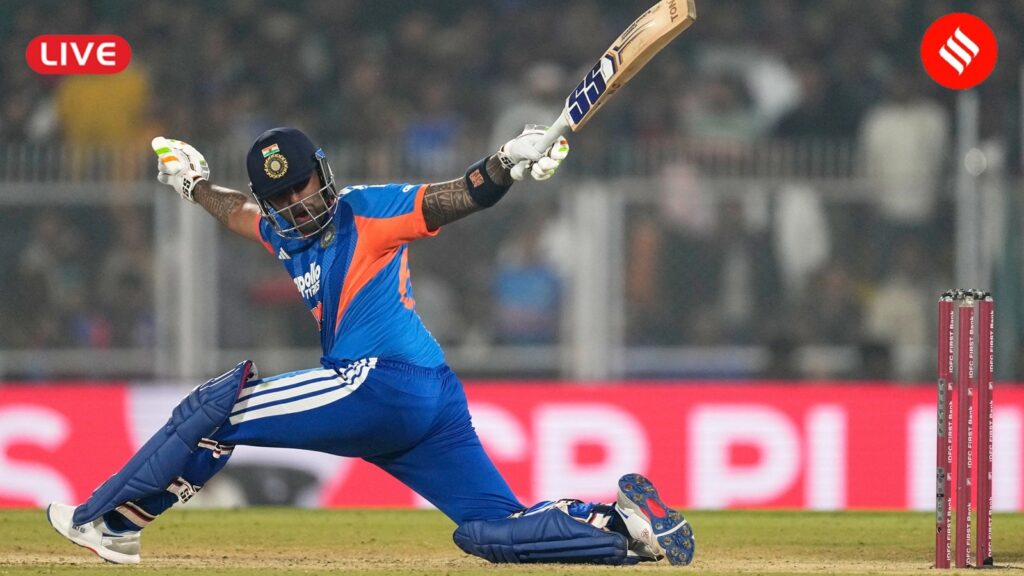

IND 193/6 (20) beat NED 176/7 (20) by 17 runs | Narendra Modi Stadium, Ahmedabad |
February 18, 2026
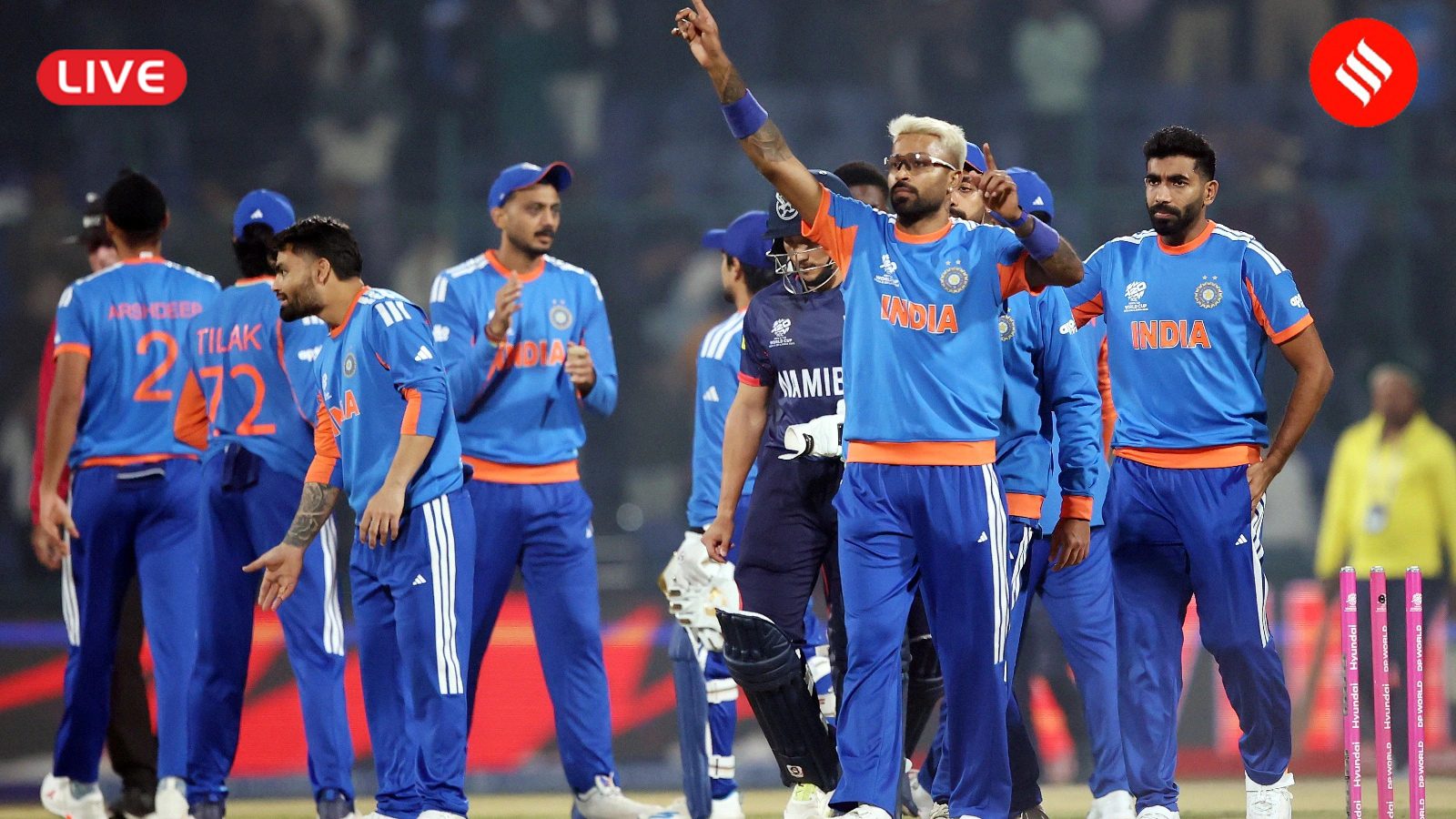
📊Match Summary
Result: India won by 17 runs
Player of the Match: Shivam Dube (66 off 31 balls, 2/35 with the ball)
Toss: India won and elected to bat first
Venue: Narendra Modi Stadium, Ahmedabad
Umpires: Adrian Holdstock, Allahudien Paleker
TV Umpire: Michael Gough
Match Referee: David Boon
🏏 Introduction: India Perfect Group Stage Ends with Statement Win
India finished their group phase in the ICC T20 World Cup 2026 with a win over the Netherlands by 17 runs in a thriller at the Narendra Modi Stadium in Ahmedabad on Tuesday, 18 February 2026. With this win, India turned out to be the only side to have gone undefeated in T20 World Cups with a phenomenal run of 12 matches in their last four tournaments and a winning streak that goes back to their 2024 championship. Additionally, it showed that Suryakumar Yadav’s Men in Blue wrapped up their Group A matches with a perfect record of 4 wins and no defeats, thus, confirming their dominance and title, winning prowess.
While India had already sealed their Super 8 qualification after their crushing 61-run
victory over arch-rivals Pakistan in their previous match, this contest against the
Netherlands was far from a dead rubber. For India, it was an opportunity to fine-tune
combinations, test bench strength, and maintain momentum heading into the knockout
rounds. For the Netherlands, with qualification mathematically impossible, this was a
chance to salvage pride, gain invaluable experience against a world-class opposition,
and end their World Cup campaign on a high note. The match delivered on both fronts
— India got the challenge they needed with early wickets and death-over pressure, while
the Netherlands showed tremendous fighting spirit to push the defending champions all
the way.
🏏 First Innings: India Post Competitive 193/6
Winning the toss for the first time in four matches at this World Cup, Suryakumar Yadav
made an interesting decision — he elected to bat first. The skipper wanted his batsmen
to set a challenging target and then give his bowlers practice at defending in potentially
dewy conditions, anticipating similar scenarios in the crucial Super 8 stage matches
ahead. However, what followed was far from the smooth batting display India would
have hoped for.
Shaky Start: Three Early Wickets
India’s start was nothing short of disastrous for the third consecutive match. Abhishek
Sharma, the explosive left-handed opener, continued his nightmarish run in the
tournament, falling for yet another duck — his third consecutive golden duck of the
competition. This time, it was Paul van Meekeren who struck first ball, trapping Abhishek
plumb in front. The young opener has now batted three times in this World Cup and
scored a grand total of zero runs, raising serious questions about his confidence and
technique against quality new-ball bowling.
His opening partner, Ishan Kishan, who had been in red-hot form throughout the
tournament, tried to counter-attack but fell cheaply for 18 off 12 balls, caught at mid-off
while attempting a lofted drive against Aryan Dutt. At 29/2 in the powerplay, India were
suddenly under pressure. Things got worse when Tilak Varma, after a promising start
where he looked fluent, holed out to long-off for 31 off 26 balls in the 10th over, bowled
by Roelof van der Merwe. India had slipped to 68/3, and the Dutch bowlers were right on
top.
The Shivam Dube Show: A Match-Winning Blitz
Enter Shivam Dube, and the complexion of the entire innings changed dramatically.
Walking in at a precarious 68/3, Dube took charge and played arguably the innings of
the tournament. He announced his intentions early, launching Aryan Dutt for a towering
six over long-on in the 11th over. What made his knock extraordinary was not just the
power hitting, but the way he handled the Dutch bowlers’ ploy of bowling slower balls
and variations on a two-paced Ahmedabad surface.
Dube smashed 66 runs off just 31 balls, an innings that included 4 fours and a
breathtaking 6 sixes. His strike rate of 212.90 single-handedly pulled India from a
position of vulnerability to dominance. The highlight of his innings came in the 16th and
17th overs, where he absolutely plundered Roelof van der Merwe and Logan van Beek.
Van Beek, in particular, was massacred for 20 runs in one over, with Dube hitting two
colossal sixes — one over deep square leg and another straight down the ground over
long-on. His batting was a masterclass in power hitting, placement, and situational
awareness.
Suryakumar Yadav (34 off 29) provided excellent support from the other end, rotating
strike and finding occasional boundaries. Together, they added 55 runs for the fourth
wicket, stabilizing the innings. After SKY’s dismissal in the 14th over, caught at cover off
Kyle Klein, Hardik Pandya joined Dube and together they accelerated brilliantly. Pandya
contributed a quickfire unbeaten 22 off 11 balls, including one outrageous six where he
somehow generated enough power to lift a short ball from Kyle Klein over long-off — a
shot that defied physics and showcased his freakish strength.
Rinku Singh also chipped in with a useful cameo of 17 off 9 balls, ensuring India crossed
the 190-run mark. In the final analysis, India posted 193/6 in their 20 overs — a total that
looked unlikely at 68/3, but became very competitive thanks to Dube’s pyrotechnics. The
Netherlands bowlers had done excellently to restrict India in the middle overs, but the
death bowling lacked penetration, with van Beek conceding 56 runs in his 4 overs — the
most expensive figures ever by a Netherlands bowler in T20 World Cup history.
🏏 Second Innings: Netherlands Fight Hard But Fall Short
Chasing 194 to win, the Netherlands knew they faced a monumental task against
arguably the best bowling attack in the tournament. However, credit to the Dutch
batsmen — they did not go down without a fight. In fact, for large parts of the chase, they
kept themselves in the game, maintaining a competitive required run rate and never
allowing India to run away with the match.
Solid Start from Dutch Openers
Michael Levitt and Max O’Dowd gave Netherlands a strong start, putting on 40 runs for
the first wicket. O’Dowd, in particular, looked aggressive, striking boundaries at will and
unsettling the Indian new-ball bowlers. However, Varun Chakaravarthy broke through in
the 6th over, having O’Dowd caught behind for 24 off 18 balls. This was the
breakthrough India desperately needed, and Chakaravarthy — who has been India’s
most consistent bowler in this tournament — once again delivered when it mattered
most.
Middle-Order Resistance
Colin Ackermann (28 off 21) and Bas de Leede (33 off 24) kept the Netherlands innings
ticking along with sensible batting. They attacked the right balls, rotated strike efficiently,
and never allowed the required rate to spiral out of control. For a brief period, it seemed
like the Dutch might pull off an upset, especially when they reached 112/4 in 14 overs,
needing 82 runs from 36 balls.
However, the class difference between the two sides became apparent in the final overs.
Varun Chakaravarthy struck again, removing Ackermann caught at deep mid-wicket by
Rinku Singh, and then castled Aryan Dutt for a golden duck off the very next ball,
bringing up his third wicket. Shivam Dube, continuing his dream match, returned to pick
up the crucial wicket of Bas de Leede, caught brilliantly by Chakaravarthy at short third
man.
Death Overs Drama
With the match slipping away, Noah Croes (25 not out off 16 balls) and Logan van Beek
(21 not out off 10 balls) tried their best to make a game of it. Croes, in particular, played
some delightful shots, including a reverse-lap six over short third man that brought the
crowd to its feet. Van Beek too connected cleanly, smashing boundaries and keeping
Netherlands’ mathematical hopes alive.
However, Jasprit Bumrah — who had been relatively quiet by his own standards —
stepped up when needed most. In the 16th over, he removed Dutch captain Scott
Edwards for 15, bowling him with a perfect yorker as Edwards attempted an ambitious
reverse-sweep. That dismissal effectively sealed the match. In the end, Netherlands
finished on 176/7 in their 20 overs, falling 17 runs short but earning tremendous respect
for their fighting spirit.
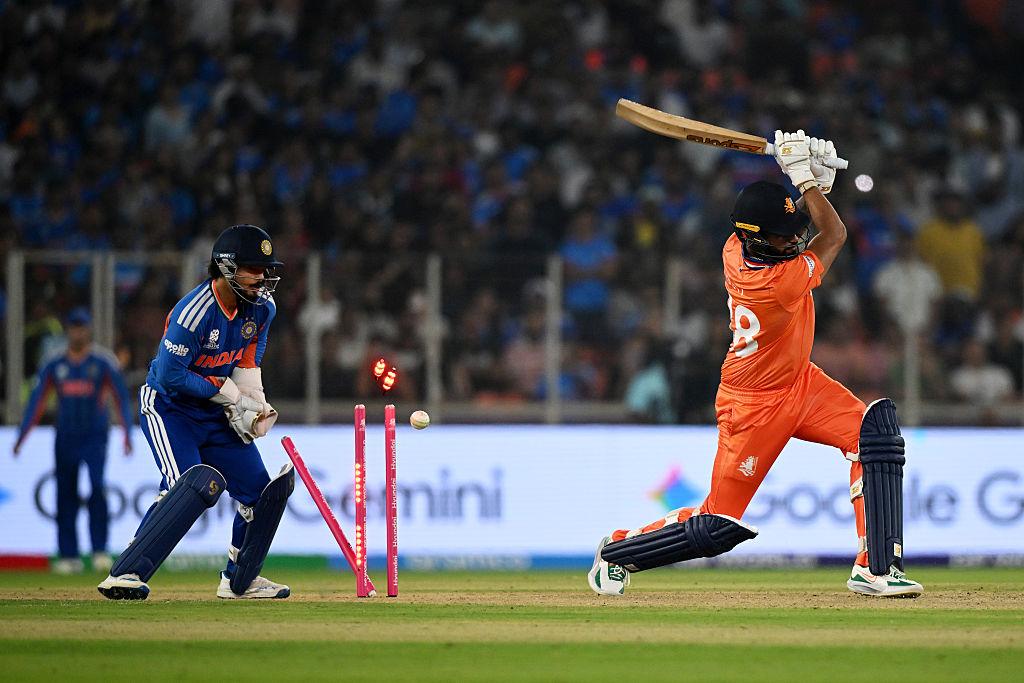
⭐ Star Performers of the Match
Shivam Dube — Player of the Match
Batting: 66 runs off 31 balls (Strike Rate: 212.90) | 4 fours, 6 sixes
Bowling: 2/35 in 3 overs (Economy Rate: 11.70)
Impact: Single-handedly rescued India’s innings from 68/3, then picked up two crucial
wickets to break Netherlands’ resistance. An all-round masterclass that won India the
match.
Varun Chakaravarthy — India’s Wicket-Taking Machine
Figures: 3/38 in 4 overs | Wickets: Max O’Dowd, Colin Ackermann, Aryan Dutt
Impact: Broke the opening partnership, removed the dangerous Ackermann just when
he was getting set, and claimed a golden duck wicket off consecutive balls. Continues to
be India’s most reliable wicket-taker.
Logan van Beek — Brave Effort in Defeat
Batting: 21 not out off 10 balls
Bowling: 1/56 in 4 overs (most expensive figures for Netherlands in T20 WC history)
Impact: Despite being taken apart by Dube with the ball, showed tremendous character
to fight till the end with the bat. His late hitting kept Netherlands in the hunt.
🔄 Key Turning Points of the Match
- Shivam Dube’s Explosive Entry (Over 11-17): India were struggling at 68/3 when
Dube walked in. His 66 off 31 completely changed the game, adding 125 runs in the final
10 overs. - Varun’s Double Strike (Over 14): Netherlands were cruising at 112/4, needing 82
from 36 balls. Chakaravarthy removed Ackermann and Dutt in consecutive balls,
breaking the Dutch momentum. - Bumrah Removes Edwards (Over 16): With 46 runs needed from 18 balls, Scott
Edwards attempted a reverse-sweep but was bowled by Bumrah. This dismissal ended
any realistic hope of a Netherlands victory.
📊 T20 World Cup 2026 Group A – Final Points Table
After the conclusion of all Group A matches, here is how the final standings looked:
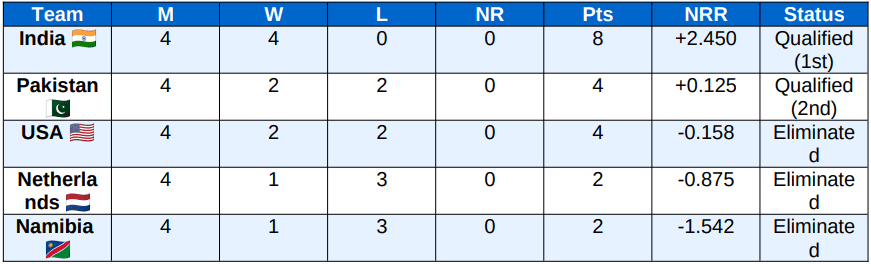
Key: M = Matches Played, W = Won, L = Lost, NR = No Result, Pts = Points, NRR = Net
Run Rate
Note: India finished top of Group A with a perfect 4-0 record and will face South Africa in
their first Super 8 match. Pakistan qualified as runners-up and will proceed to the Super
8 stage as well.
📈 What This Victory Means for India
Momentum Builder: Twelve consecutive T20 World Cup wins is an incredible
achievement. India head into the Super 8s as the form team of the tournament.
Bowling Depth Tested: India got to test their death bowling under pressure, with
Netherlands taking the game deep. This experience will be invaluable in knockout
matches.
Dube’s Emergence: Shivam Dube has now cemented his place as India’s designated
finisher. His ability to handle pressure and target specific bowlers makes him a matchwinner.
Abhishek Sharma Concern: Three consecutive ducks is a serious worry. India may
need to consider opening with Tilak Varma or Rinku Singh in the Super 8s if Abhishek’s
form doesn’t improve.
Winning Culture: India won even when not at their best. This ability to grind out
victories when conditions are tough is what separates champions from contenders.
🔜 What’s Next: India’s Super 8 Schedule
India will now move into the Super 8 stage of the tournament, where they will face
tougher opposition as the stakes get higher. Their next match is against South Africa at
the Narendra Modi Stadium in Ahmedabad on Sunday, February 22, 2026. This will be a
high-stakes clash between two unbeaten teams, and could potentially decide the top
spot in their Super 8 group.
Confirmed Super 8 Fixtures for India:
- Match 1: India vs South Africa — February 22, Ahmedabad
- Match 2: India vs West Indies — February 24, Kolkata
- Match 3: India vs New Zealand — February 27, Mumbai
Note: India are placed in Super 8 Group 1 along with South Africa, West Indies, and
New Zealand. The top two teams from this group will qualify for the semi-finals.
🏏 Conclusion: India Maintain Perfect Record
India’s 17-run victory over the Netherlands was far from straightforward, but it was
exactly the kind of challenge the defending champions needed before entering the
knockout phase. They were tested both with bat and ball, yet found a way to emerge
victorious — the hallmark of a champion side. Shivam Dube’s all-round heroics earned
him a well-deserved Player of the Match award, while Varun Chakaravarthy continued
his excellent tournament with another three-wicket haul.
For the Netherlands, this was a creditable performance that showcased their fighting
spirit. While they finished bottom of Group A with just one win, they pushed India all the
way and can hold their heads high. The experience gained from playing against the
world’s best will only help Dutch cricket grow stronger.
As India march into the Super 8s with an unblemished record and 12 consecutive T20
World Cup wins, the rest of the cricketing world has been put on notice — the defending
champions mean business, and they are not ready to give up their crown without a fight.
The real test begins now, but if the group stage is anything to go by, Team India are
more than ready for the challenge ahead.
Jai Hind! India March On!
Match Day Report: India vs Netherlands, T20 World Cup 2026 | Data Source:
ESPNcricinfo, ICC Official, Zee News, Business Standard