
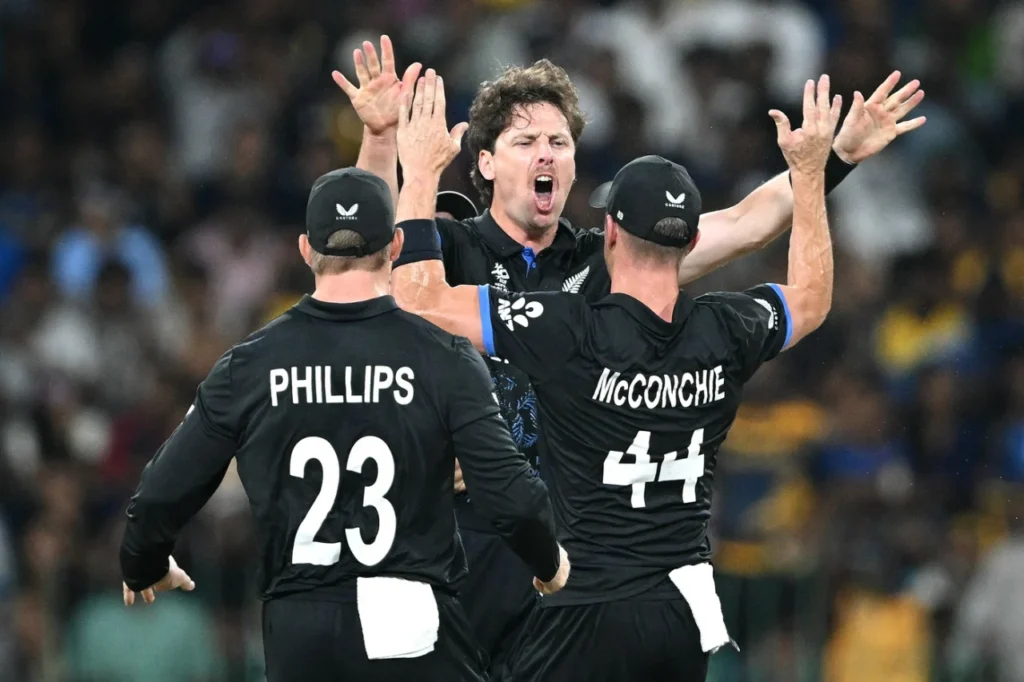

R Premadasa Stadium, Colombo | February 25, 2026 | NZ 168/7 vs SL 107/8 | Rachin
Ravindra Masterclass
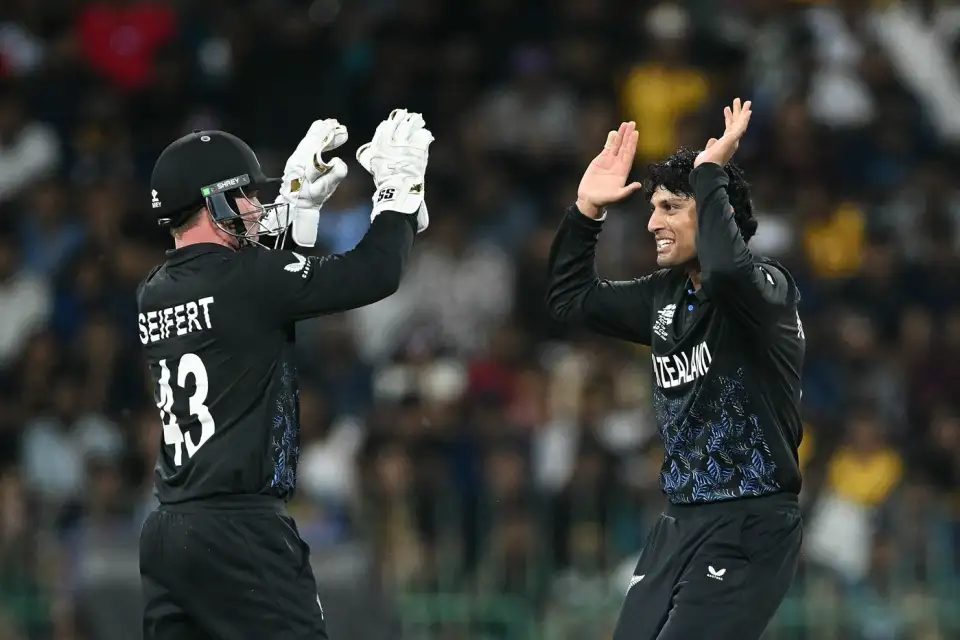
📊Match Summary
Result: New Zealand won by 61 runs
Player of the Match: Rachin Ravindra (32 runs off 22 balls + 4/27 in 4 overs)
Toss: Sri Lanka won the toss and elected to field first
Venue: R Premadasa Stadium, Colombo, Sri Lanka
Umpires: Chris Gaffaney, Nitin Menon | TV Umpire: Paul Reiffel
Key Stats: NZ 12th consecutive T20 WC win | SL worst powerplay: 20/2 in 6 overs
Tournament Impact: Sri Lanka eliminated | NZ semi-final chances boosted significantly
🏏 Introduction: Heartbreak for Co-hosts as Kiwis Cruise
sl vs nz In a crucial T20 World Cup 2026 Super 8 encounter at the iconic R Premadasa Stadium
in Colombo, New Zealand delivered a clinical performance to eliminate co-hosts Sri
Lanka by a comprehensive 61-run margin. What was supposed to be a do-or-die battle
for Sri Lankan pride turned into a one-sided demolition job, with the Kiwis showcasing
their championship credentials through disciplined bowling, strategic batting, and razorsharp fielding. Chasing a modest-looking target of 169 runs, Sri Lanka crumbled
spectacularly, managing only 107/8 in their 20 overs — a batting collapse that summed
up their disappointing campaign.
The star of the show was undoubtedly Rachin Ravindra, whose exceptional all-round
performance earned him the Player of the Match award. After contributing a valuable 32
runs off 22 balls during New Zealand batting struggles, Ravindra returned with the ball to
rip through Sri Lanka middle order with career-best figures of 4/27. His spell, which
included two stumpings off consecutive deliveries, broke the back of Sri Lankan
resistance and sealed their fate in the tournament. In this comprehensive match
analysis, we break down every aspect of this contest — the crucial moments, standout
performances, tactical decisions, and what this result means for both teams going
forward in the tournament.
🏏 First Innings: New Zealand Recovery From 84/6 to Post 168
After winning the toss and electing to field first, Sri Lanka made the perfect start by
reducing New Zealand to a precarious 84/6 in the 12th over. For a brief period, it
seemed like the home team would restrict the Kiwis to a sub-par total and keep their
tournament hopes alive. However, captain Mitchell Santner and Cole McConchie had
other plans, staging one of the great T20 World Cup recoveries to lift New Zealand to a
competitive 168/7.
Early Aggression: Finn Allen Sets the Tone
Finn Allen (23 off 11 balls, 4 fours) came out with aggressive intent, taking the attack to
Maheesh Theekshana and Dushmantha Chameera in the powerplay. His fearless
strokeplay had New Zealand racing to 39 runs in the first 4 overs. However, Theekshana
got his revenge in the 4th over, inducing a return catch that ended Allen promising
knock. Tim Seifert (8 off 9) also perished cheaply, caught in the deep while attempting to
force the pace. At 39/2 in 5 overs, Sri Lanka had pulled things back brilliantly.
Middle-Order Collapse: Three Wickets in Nine Balls
Rachin Ravindra (32 off 22, 3 fours, 1 six) and Glenn Phillips (18 off 18) tried to rebuild,
adding 36 runs for the third wicket. Both looked comfortable against spin but fell to
deliveries that kept slightly low on a two-paced Premadasa surface. The real drama
unfolded in the 11th and 12th overs when New Zealand lost four wickets for just 9 runs:
🏏 Second Innings: Netherlands Fight Hard But Fall Short
Chasing 194 to win, the Netherlands knew they faced a monumental task against
arguably the best bowling attack in the tournament. However, credit to the Dutch
batsmen — they did not go down without a fight. In fact, for large parts of the chase, they
kept themselves in the game, maintaining a competitive required run rate and never
allowing India to run away with the match.
The Collapse Sequence:
- 75/3: Glenn Phillips bowled by a yorker from Chameera (9.4 overs)
- 84/4: Rachin Ravindra bowled by Theekshana carrom ball (11.2 overs)
- 84/5: Mark Chapman bowled first ball by Theekshana (11.3 overs)
- 84/6: Daryl Mitchell caught behind off Madushanka (12.1 overs)
At 84/6, New Zealand were staring at a total of around 120-130. The Sri Lankan
spinners had completely strangled the innings, and the crowd at Premadasa was roaring
in anticipation of a famous victory.
The Rescue Mission: Santner-McConchie Record Partnership
What followed was a masterclass in pressure batting. Captain Mitchell Santner (47 off
39, 5 fours, 2 sixes) and Cole McConchie (31* off 21, 2 fours, 1 six) put on an
astonishing 84-run partnership for the 7th wicket — the highest 7th wicket stand in New
Zealand T20 World Cup history. The duo completely changed the complexion of the
innings, turning what looked like a below-par score into a competitive total.
Partnership Breakdown:
Runs: 84 off 52 balls (run rate: 9.69)
Last 5 overs yield: 78 runs
Santner strike rate: 120.51
McConchie strike rate: 147.61
Boundaries: 8 fours + 3 sixes in this stand
Santner targeted the Sri Lankan quicks in the death overs, using his reach to hit
powerful straight sixes and lofted drives. McConchie played the perfect supporting role,
rotating strike intelligently and finding boundaries at crucial moments. Chameera and
Madushanka, who had been so effective in the middle overs, were taken apart in the
death, conceding 26 and 22 runs respectively in their final two overs. New Zealand
reached 168/7 — a score that suddenly looked very competitive on a surface offering
assistance to spinners.
🏏 Second Innings: Sri Lanka Batting Implosion
Chasing 169 runs to stay alive in the tournament, Sri Lanka needed a solid start from
their openers. Instead, they got the worst possible beginning — Pathum Nissanka (0 off
1) was clean bowled by Matt Henry on the very first delivery of the innings. The inswinging yorker crashed into middle stump, sending shockwaves through the
Premadasa crowd and leaving Sri Lanka reeling at 0/1 after just one legal delivery.
Disastrous Powerplay: 20/2 in 6 Overs
Sri Lanka Powerplay Performance:
Dots Bowled: 24 out of 36 balls (66.7%)
Total Runs: 20 (3rd lowest powerplay score in T20 WC 2026)
Wickets Lost: 2 (Nissanka 0, Asalanka 2)
Boundaries: Only 2 fours
Run Rate: 3.33 runs per over
Charith Asalanka (2 off 7) tried to rebuild but fell to a brilliant slower ball from Matt
Henry, skying a catch to mid-off. Kusal Mendis (11 off 22) came in with the responsibility
to anchor the innings, but his ultra-defensive approach put immense pressure on the
scoring rate. At 20/2 after the powerplay, Sri Lanka needed 149 runs from 84 balls — a
required rate of over 10 per over on a pitch that was getting slower. The task was
already looking mountainous.
Rachin Ravindra Spin Masterclass: 4/27 in 4 Overs
If the batting collapse had a chief architect, it was Rachin Ravindra. The left-arm spinner
was introduced in the 7th over and immediately made an impact. His variations in flight,
pace, and turn bamboozled the Sri Lankan batsmen, who seemed to have no answer to
his guile and control. Ravindra four-wicket haul not only won him the Player of the Match
award but effectively ended Sri Lanka chances of pulling off the chase.
Rachin Ravindra Wickets Breakdown:
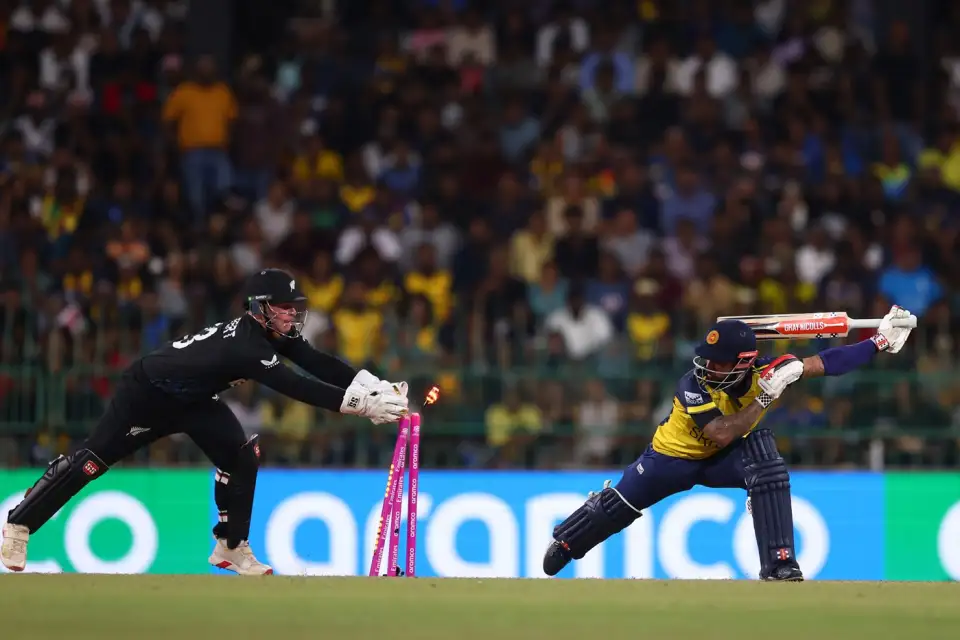
- Kusal Mendis (11 off 22): Stumped by Seifert — Mendis charged down the track to a
flighted delivery that dipped and turned sharply, leaving him stranded well outside the
crease. Tim Seifert completed a lightning-fast stumping. - Pavan Rathnayake (1 off 3): Stumped by Seifert — The very next ball! Rathnayake,
perhaps rattled by seeing Mendis dismissal, also came down the wicket without reading
the length. Another brilliant piece of glovework from Seifert. - Dasun Shanaka (7 off 9): Caught at backward point — A well-disguised slower ball
that gripped in the surface. Shanaka was through his shot too early, and the ball
ballooned to backward point for a simple catch. - Dushan Hemantha (4 off 5): Caught at long-on — Hemantha tried to break the
shackles with a big shot but completely mistimed a loopy delivery. The ball went high but
not far, with the fielder at long-on taking a comfortable catch.
Taking four wickets in three consecutive overs, including two stumpings off back-to-back
deliveries, was the work of a master craftsman. Ravindra economy rate of 6.75 was
remarkable considering he bowled in the middle overs when batsmen were desperate to
accelerate. Sri Lanka slumped to 59/6 in the 11th over, and the game was effectively
over.
Dunith Wellalage Lone Fight
Dunith Wellalage (29* off 18 balls, 2 fours, 1 six) was the only Sri Lankan batsman who
showed any fight. His counter-attacking approach, including a stunning reverse-scoop
six over short third man, brought the crowd momentarily to life. He hit clean and played
with freedom, but without support from the other end, his efforts were in vain. The tail
provided no resistance, and Sri Lanka innings ended on 107/8 in 20 overs — losing by a
humiliating 61 runs. The home crowd, which had been so vociferous at the start, sat in
stunned silence as their team dreams were crushed.
🔄 Key Turning Points of the Match
- First Ball of the Chase (0.1 overs): Matt Henry clean bowling Pathum Nissanka first
ball was a psychological body blow. It set a negative tone and immediately put Sri Lanka
on the back foot. The pressure from that dismissal lingered throughout the innings. - Santner-McConchie Partnership (Overs 13-19): The 84-run stand transformed New
Zealand total from a below-par 84/6 to a competitive 168/7. This partnership ultimately
proved to be the difference between the two teams. - Ravindra Double Stumping (Overs 8.1-8.2): Getting two batsmen stumped off
consecutive balls broke the back of Sri Lanka middle order. From 34/3, they collapsed to
34/5, and the required rate ballooned beyond reach. - Sri Lanka Powerplay Failure (Overs 1-6): Scoring only 20/2 in the powerplay made
the chase virtually impossible. On a two-paced pitch where batting became increasingly
difficult, losing the powerplay battle meant losing the match.
⭐ Star Performers and Disappointing Shows
✅ Outstanding Performances
- Rachin Ravindra (New Zealand): Complete all-round performance — 32 runs off 22
balls with the bat in a crisis, then a match-winning 4/27 with the ball. Richly deserved
Player of the Match award. - Mitchell Santner (New Zealand): 47 runs off 39 balls — Captain leading from the
front. His counter-attacking innings turned the match on its head. Also bowled
economically, conceding just 18 runs in 3 overs. - Cole McConchie (New Zealand): 31* off 21 balls — The unsung hero. Played the
perfect supporting role to Santner, rotating strike brilliantly and finding boundaries at
crucial moments. - Matt Henry (New Zealand): 2/29 in 4 overs — The first-ball wicket set the tone for
New Zealand dominance. His variations in the powerplay completely stifled Sri Lanka
batsmen. - Dunith Wellalage (Sri Lanka): 29* off 18 balls — The only Sri Lankan batsman who
showed any fight. His reverse-scoop six was the shot of the match, but he lacked
support from his teammates.
❌ Disappointing Performances
- Pathum Nissanka (Sri Lanka): Golden duck on the first ball of the chase. As the
opening batsman and a senior player, this was a devastating blow to Sri Lanka hopes. - Kusal Mendis (Sri Lanka): 11 runs off 22 balls (strike rate 50.00) — Completely
failed in his anchor role. Consumed too many balls without any intent to score
boundaries, putting unbearable pressure on the middle order. - Dasun Shanaka (Sri Lanka): As captain, his leadership was passive. Personally, he
scored just 7 off 9 balls. Failed to inspire or lead by example when his team needed him
most. - Finn Allen (New Zealand): Despite an aggressive 23 off 11, his dismissal triggered
the middle-order collapse. Needed to bat longer to build a partnership and give his team
a platform.
📊 Match Statistics: A Comprehensive Comparison
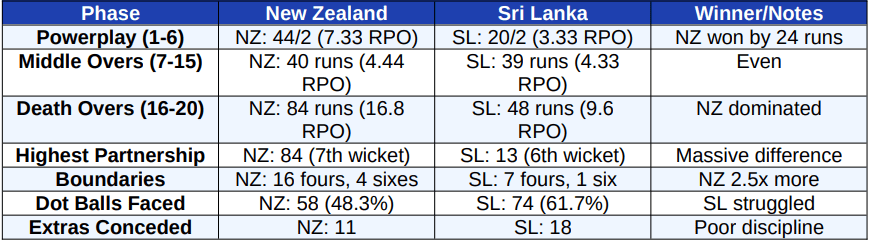
The statistics tell the story clearly — New Zealand won every single phase of the game
convincingly. Their powerplay was better, their death batting was explosive, and their
bowling was clinical. Sri Lanka, on the other hand, could not find any momentum in any
department. The 24-run difference in powerplay scores alone was insurmountable on
this pitch.
📈 Tournament Implications: Semi-Final Race Heats Up
For New Zealand
✓ Semi-final qualification almost secured
✓ Net Run Rate boosted to +1.85 (group highest)
✓ 12th consecutive T20 World Cup victory
✓ Next match vs England becomes less pressure
✓ Can rest key players if needed
✓ Psychological advantage over rivals
New Zealand are now virtually assured of a semi-final spot. Even if they lose to England
in their next match, their superior Net Run Rate gives them a significant cushion. The
Kiwis have once again shown why they are perennial contenders in ICC tournaments —
calm under pressure, tactically astute, and ruthless when on top.
For Sri Lanka
✗ Eliminated from T20 World Cup 2026
✗ Humiliating exit in front of home crowd
✗ Questions over team selection and tactics
✗ Batting failures exposed throughout tournament
✗ Complete rebuild needed in T20 format
✗ Pressure on coaching staff and management
For co-hosts Sri Lanka, this is a bitter pill to swallow. To be eliminated at the Super 8
stage, at home, with such a comprehensive loss, will hurt for a long time. The batting
failures have been consistent throughout the tournament, and serious questions need to
be asked about the team composition, strategy, and preparation. Sri Lanka T20 cricket
needs a complete overhaul if they are to compete at the highest level in future
tournaments.
💬 Post-Match Reactions and Expert Analysis
Mitchell Santner (New Zealand Captain):
“Very proud of the way the boys fought back. At 84/6, we could have folded, but Cole
and I believed we could get to 160-165. We knew 170 was a winning score on this pitch.
Credit to our bowlers, especially Rachin — what an all-round performance. The Sri
Lankan crowd was amazing even when they were bowling to us, which shows the spirit
of the game here.”
Dasun Shanaka (Sri Lanka Captain):
“Extremely disappointing performance. We bowled well to get them to 84/6 but could not
finish the job in the death overs. With the bat, we showed no intent, no fight. You cannot
chase 169 with the approach we showed today. Our batsmen need to take responsibility
— this is international cricket, not club level. We have one more game left, and hopefully
we can end the tournament with some pride.”
Rachin Ravindra (Player of the Match):
“Honestly, it was important to contribute with the bat first. When you lose 6 wickets and
the captain is batting with you, you just want to support him. With the ball, I was just
trying to bowl as many variations as possible. The pitch was two-paced, so I used that to
my advantage. Getting two stumpings in two balls was lucky — credit to Tim Seifert for
brilliant glovework behind the stumps.”
Cricket Expert Commentary:
“New Zealand have once again shown their mastery of knockout cricket. Their ability to
stage recoveries from difficult situations is unmatched — we saw it in the 2019 World
Cup final, the 2021 WTC final, and now again in this match. Sri Lanka, on the other
hand, have serious structural issues in their T20 batting. Over-reliance on the top three,
lack of power hitters in the middle order, and absence of aggressive intent are
fundamental problems that need immediate addressing.”
🔜 What Lies Ahead: Remaining Fixtures and Scenarios
New Zealand Schedule
Next Match: vs England (February 27, Colombo)
- Already virtually qualified for semi-finals
- Can afford to rest key players if needed
- Top spot in group still up for grabs
- Likely to face India or Australia in semi-final
- Confidence at an all-time high
Sri Lanka Remaining Match
Last Match: vs Pakistan (February 28, Colombo)
- Already eliminated — playing for pride
- Opportunity to give young players exposure
- Can spoil Pakistan chances of progressing
- Need to end on a positive note for fans
- Time to experiment with team composition
🏏 Conclusion: New Zealand Class vs Sri Lanka Collapse
The Sri Lanka vs New Zealand T20 World Cup 2026 Super 8 match was a tale of
contrasting fortunes — one team that fought back from the jaws of defeat, and another
that capitulated under pressure. New Zealand remarkable recovery from 84/6 to 168/7,
orchestrated by captain Mitchell Santner and Cole McConchie, epitomized their neversay-die attitude. The 84-run partnership for the 7th wicket will go down in New Zealand
cricket folklore as one of the great rescue acts in T20 World Cup history.
For Sri Lanka, this defeat represents more than just a loss — it is a wake-up call. The
batting frailties that have plagued them throughout the tournament came to a head in
this match. Pathum Nissanka golden duck, Kusal Mendis inability to accelerate, and the
middle-order collapse meant they never stood a chance in the chase. Only Dunith
Wellalage showed any fight, and his lone efforts were nowhere near enough to
challenge New Zealand total.
Rachin Ravindra match-winning performance — 32 runs with the bat followed by a
devastating 4/27 with the ball — highlighted the depth and quality in the New Zealand
squad. Matt Henry first-ball wicket, Tim Seifert brilliant stumpings, and the disciplined
bowling throughout showed that this is a team that knows how to win big matches. As
New Zealand march towards the semi-finals with confidence soaring, Sri Lanka must
regroup, reflect, and rebuild. This tournament may be over for the co-hosts, but the
lessons learned from this painful campaign must not be forgotten.
🏆 New Zealand Semi-Final Bound! The Kiwi Machine Rolls
On!
Published: February 25, 2026 | Match Report: SL vs NZ T20 World Cup 2026 Super 8 | Data Source: ESPNcricinfo,
ICC Official, Outlook India, Business Standard